

Adaptive software development: what it is and how it works
Adaptive software development (ASD) is an agile method for building software when you cannot know every requirement in advance. Instead of writing a full plan and following it to the end, you repeat three phases: speculate, collaborate and learn.
By the FocalID team in Colombo, , 8 min read
In adaptive software development you treat the plan as an informed guess, build a small piece of working software, and let the results correct the next cycle. Jim Highsmith and Sam Bayer developed the approach in the 1990s, building on rapid application development.
This article covers more than the definition. You will see why the method matters, how to run one full cycle with a worked example, which principles hold it together, and how it compares with Scrum, Kanban, Waterfall and Extreme Programming. It also covers when ASD fits a project and where it tends to fail.
At FocalID, we build AI agents and business software, and the projects where requirements shift once people see working software are exactly where this way of thinking pays off. The advice below comes from that kind of delivery work.
Why adaptive software development matters
Adaptive software development matters because it matches how complex projects behave. Requirements change, and ignoring that fact makes the changes expensive when they finally arrive.
Plans fail when requirements are guesses
Most software plans are written when you know the least. A fixed specification assumes you can describe every feature before anyone has used a working version. ASD starts from the opposite assumption. Uncertainty is normal, so you commit to a mission and a short plan, then let real feedback decide what comes next.
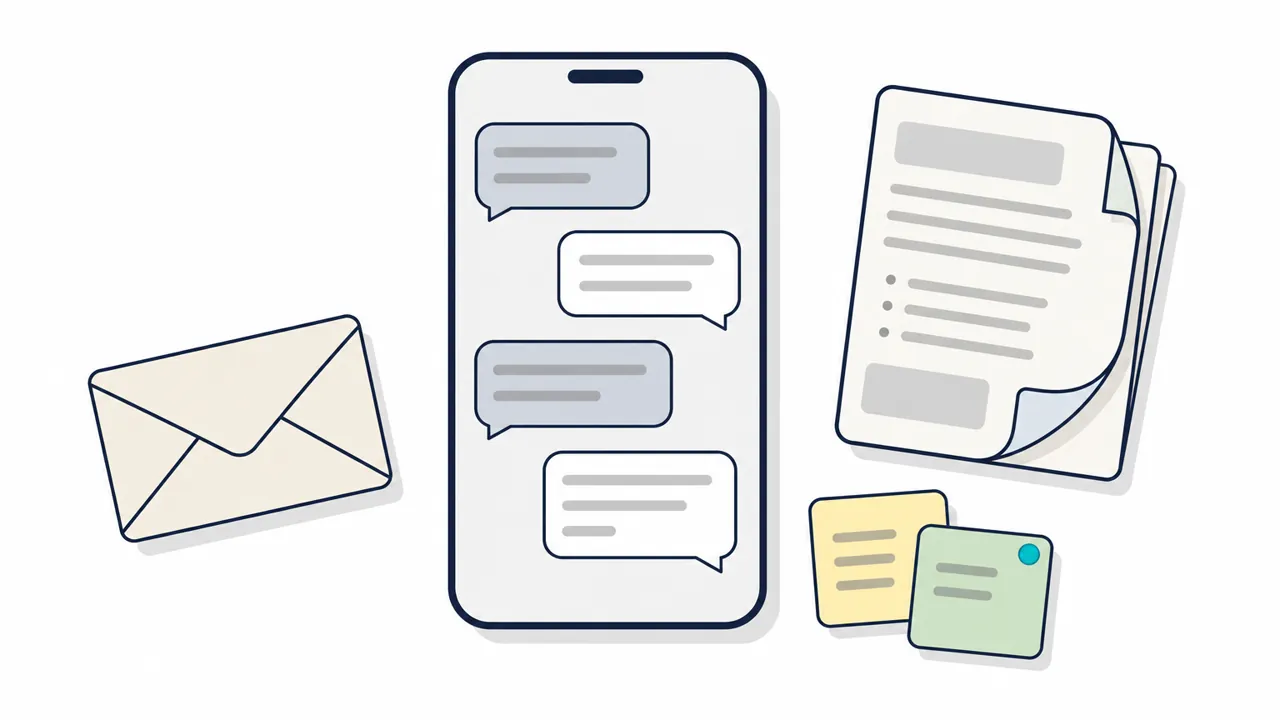
Take an AI agent that answers customer requests from WhatsApp and email. You cannot know up front which requests are routine and which need a person. You learn that only after the agent meets real messages. A method built around that discovery wastes less money than one that pretends the answer was known on day one.
Adaptive development does not abandon planning. It stops pretending the plan is a promise.
Where the method comes from
Highsmith drew on complexity science, which treats a project as a system you can steer but never fully control. He later set out the ideas in his book on adaptive development. In 2001 he was one of the 17 signatories of the Agile Manifesto. That makes ASD an early member of the agile family, and its speculate, collaborate, learn lifecycle is what sets it apart.
How to run a speculate, collaborate, learn cycle
You run one cycle by setting a mission and a first plan, building with everyone in the room, and then reviewing what happened before you plan again. Repeat it until the product does its job.
The three phases at a glance
| Phase | What you do | What you leave with |
|---|---|---|
| Speculate | Set the mission, list assumptions and risks, pick the features for this cycle | A short feature list, a risk list, a time box |
| Collaborate | Build and test with developers, designers, testers and the customer working together | Working software and resolved blockers |
| Learn | Review with users, run technical reviews, hold a retrospective | Confirmed or rejected assumptions and new priorities |
- 1SpeculateSet the mission, list assumptions and risks, pick this cycle’s features.
- 2CollaborateDevelopers, designers, testers and the customer build and test together.
- 3LearnReview with users, run technical reviews, hold a retrospective.
Speculation is not prediction. You write down what you believe and mark each belief as an assumption to test. Collaboration is the hardest phase, because it needs trust: people must criticize without animosity and raise problems early. Learning is where Highsmith’s three classic tools apply: customer focus groups, technical reviews, and a project postmortem.
A worked example: three four-week cycles
Suppose you build a customer-service agent for a retailer over 12 weeks, as three four-week cycles. In cycle one you speculate that most requests are order-status questions, so the agent handles only those. The review shows many messages are about refunds, which staff must decide.
In cycle two the agent hands refund requests to a person with the order details attached. In cycle three it adds stock checks. A short fixed-scope pilot, such as FocalID’s four-week AI agent pilot with one live agent on one real workflow, fits this rhythm well.
Every cycle ends with something users can try, and what they say shapes the next cycle.
The principles behind adaptive software development
The principles of adaptive software development say what a cycle must look like: aimed at a mission, delivered in features, short, time-boxed, risk-aware, and open to change. A team culture of trust and learning makes them work.
The six attributes of an ASD project
Highsmith describes an adaptive project with six attributes:
- Mission focused: a clear goal guides every decision, even when the requirements are still vague.
- Feature based: you plan around working features the customer can see, not internal tasks.
- Iterative: you build in repeated cycles and refine the result each time.
- Time-boxed: every cycle has a fixed end date, so scope flexes instead of the schedule.
- Risk driven: you tackle the most uncertain or dangerous parts first.
- Change tolerant: you expect scope to shift and build the process to absorb it.
The risk-driven attribute is the one teams skip most often. Building the easy features first feels productive, but it postpones the bad news. Start with the part you understand least.
Collaboration and learning as habits
ASD asks teams to self-organize, with decisions made close to the work instead of passed down from managers. That works only if people tell the truth about problems, assist without resentment, and keep their skills current. Measure progress by what users can test and review, not by tickets closed.
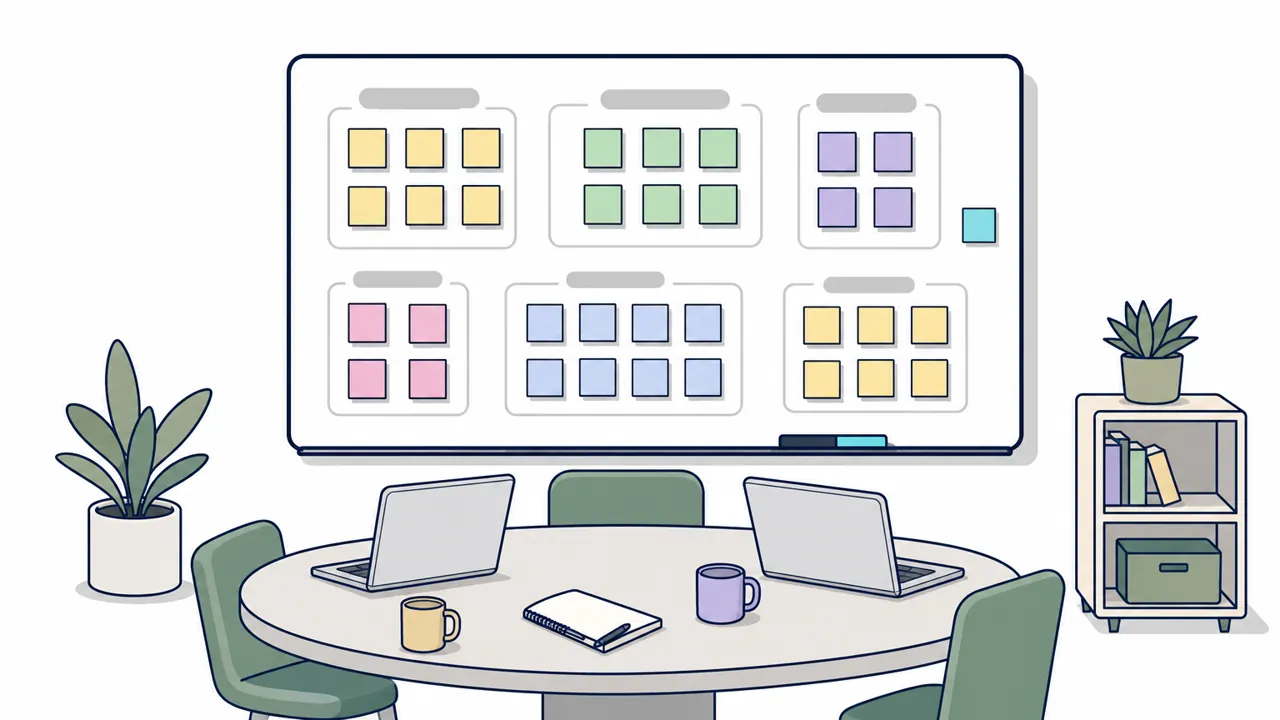
Trust is the real infrastructure of adaptive development, and no tool can replace it.
Adaptive software development vs Scrum, Kanban, Waterfall and XP
ASD is a way of thinking about uncertainty, while Scrum, Kanban and Extreme Programming are working frameworks, and Waterfall is the plan-first model that ASD reacts against. The table puts them side by side.
Side-by-side comparison
| Method | Planning | Rhythm | Best for |
|---|---|---|---|
| Adaptive software development | Mission plus flexible plan per cycle | Speculate, collaborate, learn cycles | Complex projects with changing requirements |
| Scrum | Sprint planning with a backlog | Fixed sprints, defined roles and events | Teams that want a clear routine |
| Kanban | Continuous, limited work in progress | Continuous flow | Steady streams of support or maintenance work |
| Extreme Programming | Short planning games | Very short iterations | Teams that want strict engineering practices such as test-driven development |
| Waterfall | Full plan up front | Sequential stages | Stable, well-defined, contract-driven projects |
How to choose between them
ASD prescribes few roles and ceremonies. Scrum prescribes more: roles, sprint events and artifacts. That difference makes ASD easier to combine with other methods than to replace them. A team can run Scrum sprints inside an ASD cycle and use the learn phase as a deliberate review of assumptions, not only of velocity.
Choose Waterfall only when requirements are truly fixed. Choose Kanban for work that arrives continuously. Choose adaptive software development when you know the destination but not the route.
If the route is unknown, plan for learning. If the route is known, plan for delivery.
When adaptive software development fits and where it fails
Adaptive software development fits projects with a clear goal and an uncertain path, and it fails when the team or customer cannot support its demands. Know both sides before you commit.
Signs it is a good fit
ASD works best when:
- Requirements are likely to change as users see the product.
- Customers or stakeholders can give feedback every cycle.
- The technology is new, so risks are unknown.
- You are building a new product or entering an unfamiliar market.
- A cross-functional team can work together throughout.
Common weaknesses and how to limit them
The method demands experienced people. A junior team may drift without a fixed plan, which is one reason we staff projects with senior engineers only. Scope creep is the second danger, because flexibility invites endless additions. The time box and the mission are your defenses: if a request does not serve the mission, it waits.
The third weakness is customer availability. If nobody can review each cycle, the learn phase produces nothing. Finally, outcomes are harder to forecast, so many teams agree a fixed price and duration for a small first cycle before committing to a larger budget.
Flexible scope needs a firm mission and a firm time box, or flexibility turns into drift.
Start with one small cycle
Adaptive software development replaces a fixed plan with repeated cycles of speculating, collaborating and learning. It earns its place when requirements are uncertain, feedback is available, and the team is senior enough to steer without a rigid script. Its principles are simple: aim at a mission, ship working features in time-boxed cycles, face risks early, and let evidence change the plan.
You do not need to adopt it everywhere. Pick one project with real uncertainty, run a four-week cycle, and review honestly. If you want help scoping that first cycle for an AI, data, web or mobile project, talk to FocalID about a small, fixed-scope first project.
Common questions
What is adaptive software development?
Adaptive software development (ASD) is an agile method for building software when the requirements cannot all be known in advance. The team repeats three phases, speculate, collaborate and learn, and lets the results of each cycle correct the plan for the next.
Who created adaptive software development?
Jim Highsmith and Sam Bayer developed it in the 1990s, building on rapid application development. Highsmith was later one of the 17 signatories of the Agile Manifesto in 2001.
What are the three phases of ASD?
Speculate: set the mission and pick the features for the cycle. Collaborate: build and test together with the customer. Learn: review the result with users and the team, then adjust the plan.
Is adaptive software development the same as Scrum?
No. Scrum prescribes roles, sprint events and artifacts. ASD prescribes very little and is more a way of handling uncertainty, so the two can be combined: a team can run Scrum sprints inside an ASD cycle.